Beat Decision Fatigue: How Time-Boxing Saves Your Mental Energy
You make about 35,000 decisions a day. Most are tiny — what to wear, what to eat, when to check email. But each one taxes the same finite mental resource.
By 3 PM, that resource is depleted. You make worse decisions, default to easy choices, and avoid hard problems. This is decision fatigue, and it is silently destroying the back half of every workday.
The good news: time-boxing can eliminate hundreds of these micro-decisions before they happen.
The Science of Decision Fatigue
The term was coined by social psychologist Roy Baumeister, whose research showed that willpower and decision-making draw from a shared mental reserve.
The Israeli Parole Judge Study
The most famous decision-fatigue study analyzed 1,112 parole hearings by Israeli judges. The pattern:
- Start of day: 65% favorable rulings
- Just before lunch: 0% favorable rulings
- After lunch break: 65% favorable rulings (reset!)
- End of day: Back near 0%
The judges were not consciously biased. Their depleted minds defaulted to the easier "no" decision rather than the harder "yes" that required careful analysis.
The same effect drains your work output. By late afternoon, you default to:
- Saying yes to easy meetings instead of declining
- Opening Slack instead of starting hard work
- Picking the safe option instead of the right one
- Postponing rather than deciding
Why Time-Boxing Defeats Decision Fatigue
Time-boxing eliminates the most exhausting category of decisions: what to do next.
Without a schedule, every transition triggers questions:
- "What should I work on now?"
- "Should I check email first?"
- "Is this important enough to start now?"
- "Maybe I should just take a break?"
Each question consumes mental energy. Multiplied across the day, this background processing alone can deplete 30-40% of your daily willpower budget.
With a time-boxed schedule:
- The next task is pre-decided
- The duration is pre-decided
- The order is pre-decided
- You execute, not deliberate
You free up that 30-40% for decisions that actually matter — strategic choices within your work.
The "Decisions of Note" Filter
Steve Jobs wore the same outfit daily. Mark Zuckerberg too. Barack Obama wore only gray or blue suits. The rationale, in Obama's words:
"I'm trying to pare down decisions. I don't want to make decisions about what I'm eating or wearing. Because I have too many other decisions to make."
This is not eccentricity. It is decision-budget management. Every trivial decision you eliminate frees mental capacity for the few that actually shape your life.
Apply It to Your Workday
List your daily decisions. Which can be pre-decided?
- Eliminate: "What should I work on at 9 AM?" → Pre-decided in last night's plan
- Eliminate: "When should I check email?" → 9 AM, 1 PM, 4 PM only
- Eliminate: "Should I take a break now?" → Scheduled at 11 AM, 3 PM
- Eliminate: "What should I eat for lunch?" → Same 3 options weekly
Each elimination saves cognitive budget for the decisions that truly differentiate your output.
Night-Before Planning: The Highest-Leverage Habit
A single 10-minute habit beats every other productivity hack: plan tomorrow's time-boxes the night before.
The Mechanism
When you plan in the morning, you spend your peak cognitive resource on planning instead of executing. By the time you start real work, you are already depleted.
When you plan the night before, three things happen:
- Tomorrow's first decision is pre-made — you wake into execution mode
- Your subconscious works overnight — sleep consolidates the plan into commitment
- Morning willpower goes to the work itself — not to planning the work
Implementation Intentions Research
Peter Gollwitzer's seminal research on "implementation intentions" found that pre-committing to specific time-and-place plans increases follow-through by 200-300%.
The format: "I will [specific action] at [specific time] in [specific location]."
Time-boxing is implementation intention scaled to an entire day.
The Decision Fatigue Recovery Protocol
Even with time-boxing, decision fatigue still accumulates. Build deliberate recovery:
1. Lunch Break Reset
Step away from screens for 20-30 minutes. Eat away from your desk. The Israeli judge study showed lunch fully restores decision quality.
2. The 3 PM Walk
A 15-minute outdoor walk between 3-4 PM resets attention and decision capacity. Studies on directed attention restoration show nature exposure (even brief) recovers cognitive resources.
3. Decision-Free Evenings
Once your last work box ends, the day's hard decisions are done. Switch to autopilot mode — pre-decided dinner, pre-decided wind-down routine. Save mental energy for tomorrow.
Common Mistakes
Mistake 1: Planning in the Morning
Morning planning burns peak willpower on logistics. Always plan the night before.
Mistake 2: Reopening Decisions Mid-Day
You decided your 2 PM box would be deep work. At 1:55 PM, you reconsider. Do not. The decision was made. Execute.
Mistake 3: Decision Marathons
Scheduling 6 hours of meetings means 6 hours of continuous decision-making. Cap meeting blocks at 90 minutes with mandatory recovery breaks between.
Mistake 4: No Pre-Decided Defaults
If "what to wear" or "what to eat" requires fresh thought daily, you are bleeding budget. Build defaults.
How Chrobox Reduces Decision Load
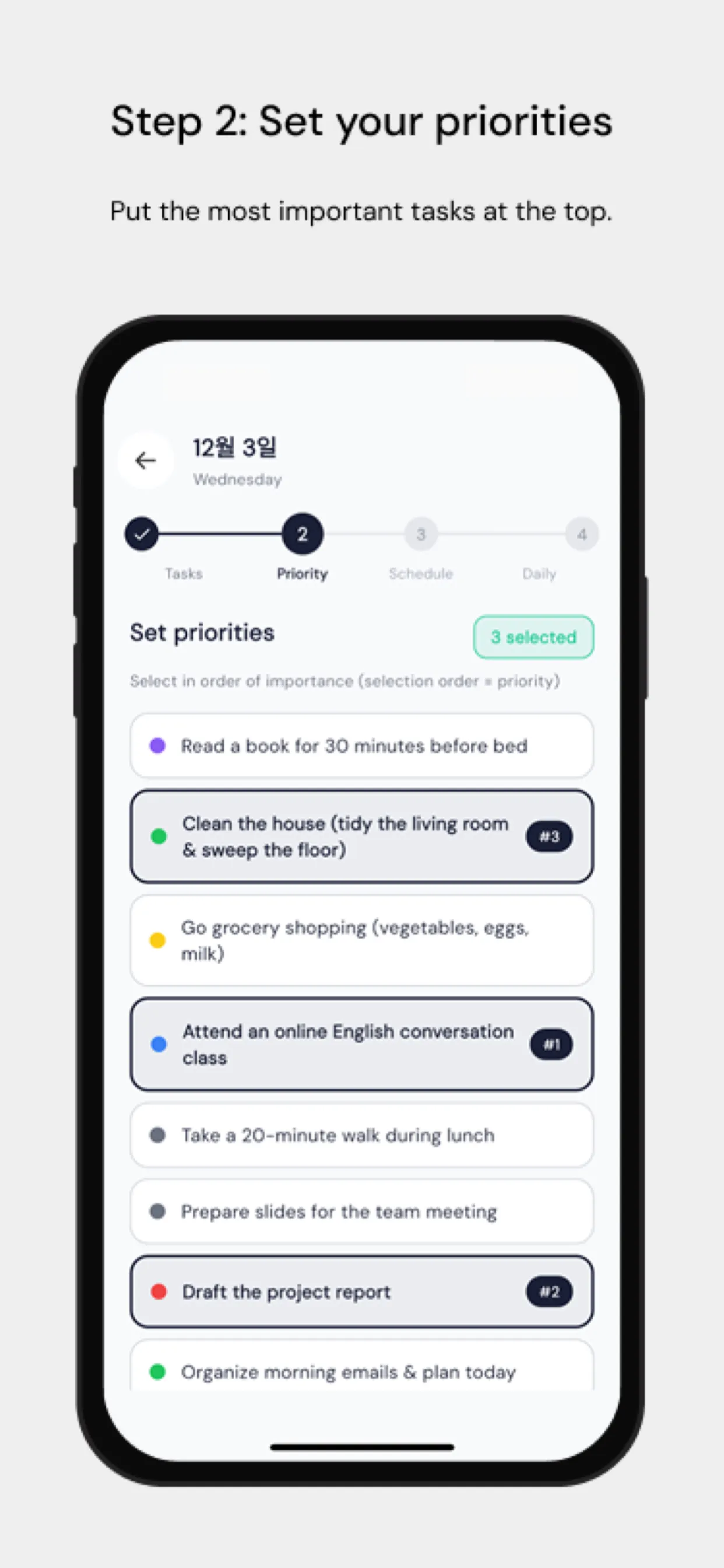
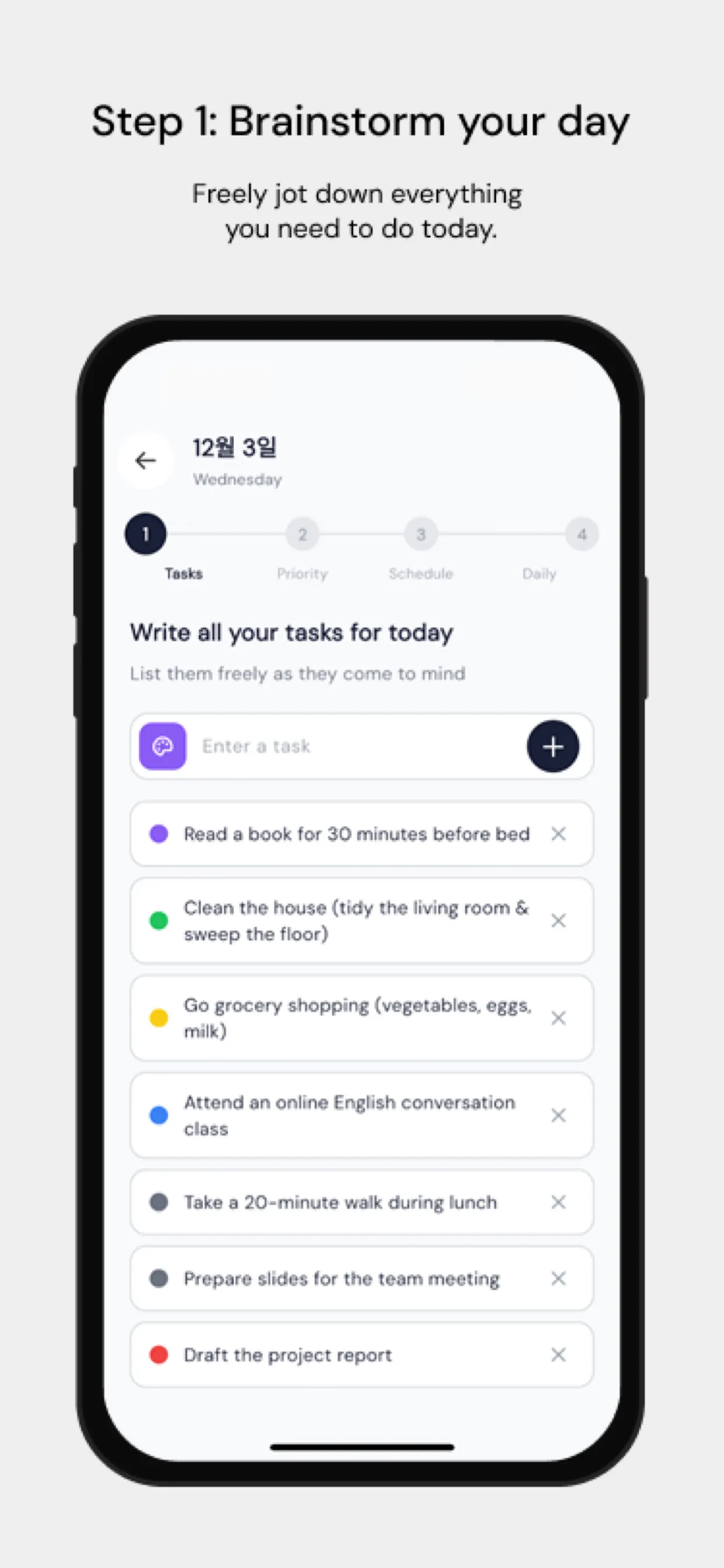
Chrobox is designed to minimize decision fatigue:
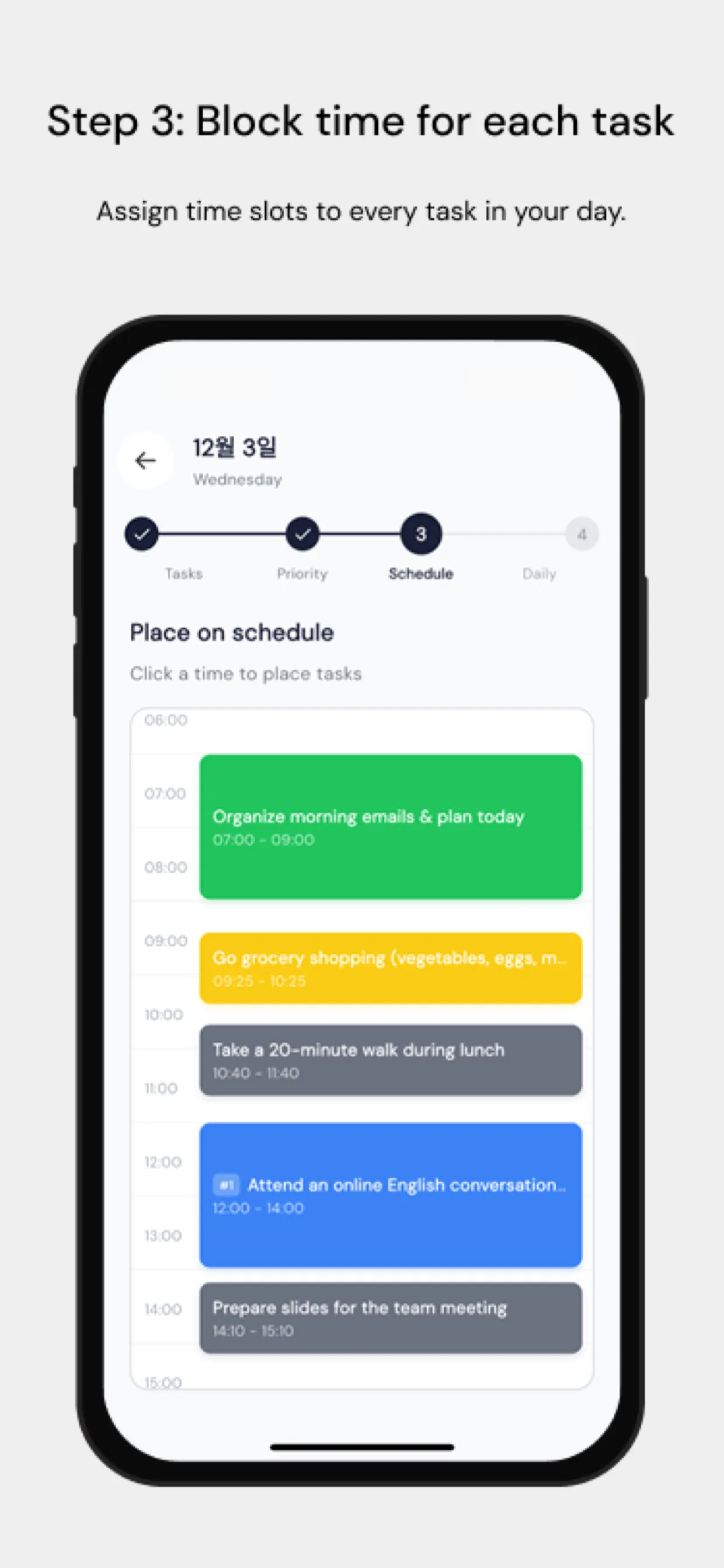
- Auto-suggested time-boxes based on past patterns (no decision needed)
- Recurring templates for routine days (Monday is always the same shape)
- Evening planning prompt at your set time
- Default durations for common task types
Conclusion
Your willpower is a finite battery that drains with every decision. Time-boxing eliminates the largest category of mental drain — "what should I do next?" — and frees that capacity for the few decisions that actually move your life forward.
Tonight, spend 10 minutes pre-deciding tomorrow's first three time-boxes. Tomorrow morning, wake into execution mode. Notice how much more energy you have at 3 PM than usual.
That is what decision-fatigue freedom feels like.